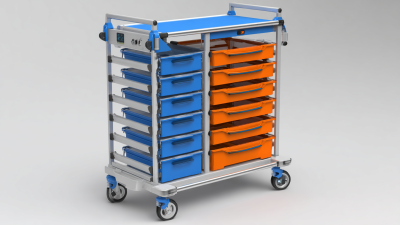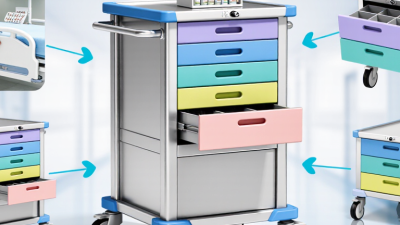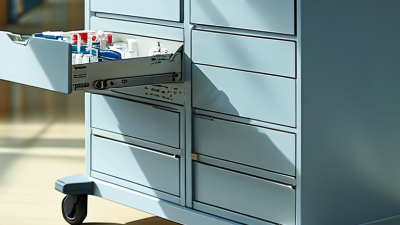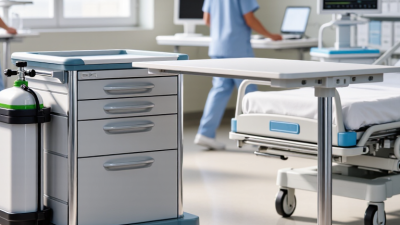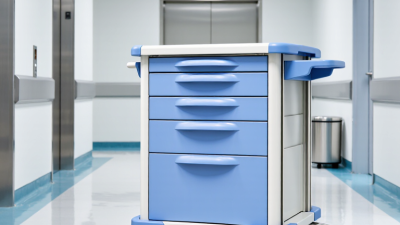
Choosing a medicine cart in 2026 is not just a purchasing decision. It affects how staff move medications, organize supplies, and work through busy shifts. A cart that fits one ward may feel awkward in another. No cart wins every ward.
Healthcare quality expert Don Berwick is often associated with this systems principle: “Every system is perfectly designed to get the results it gets.” Applied to medicine cart selection, it is a reminder to assess the whole workflow, not just the product brochure. Consider drawer layout, locking options, maneuverability, cleaning access, and compatibility with the ward’s routines. A narrow corridor or a crowded medication room can reveal problems that a showroom cannot.
This guide reviews ten medicine cart options for hospitals in 2026, with attention to practical trade-offs rather than claims of a universal best choice. Look for details that matter during real shifts: labels staff can read at a glance, drawers that open smoothly, and wheels that handle thresholds without jolting. Check whether the cart supports your facility’s existing processes and equipment. Those details deserve a close look.
There is no perfect shortlist. Product specifications can change, and local needs differ. Use these comparisons as a starting point, then verify current specifications with manufacturers and assess shortlisted carts with the staff who will use them. The small details count.
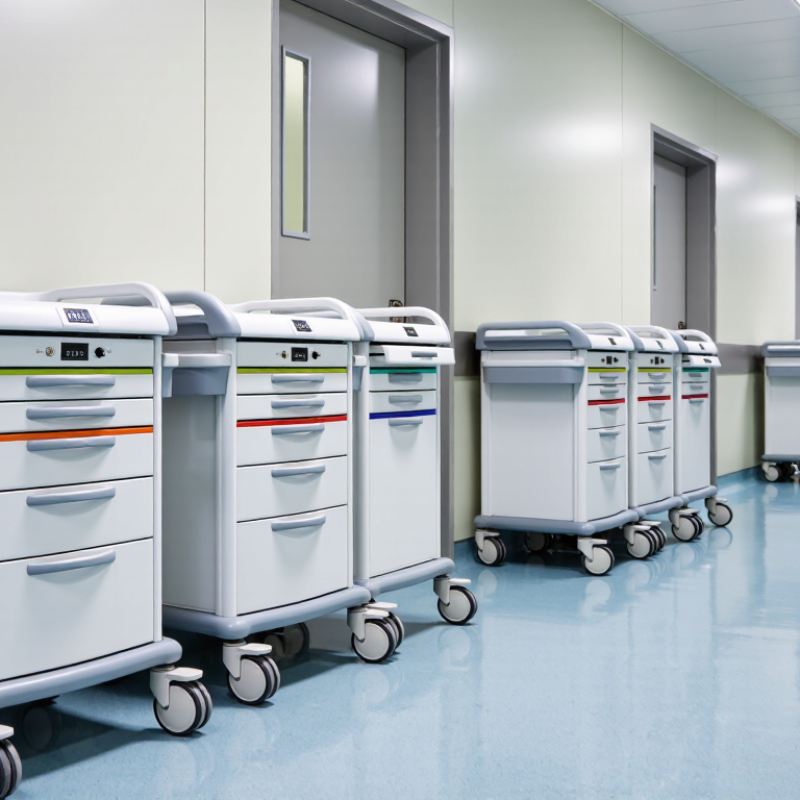
Hospital medicine carts are mobile workstations that help clinical teams organize and transport medications and related supplies. A nurse may move one from a preparation area to a bedside, keeping commonly used items close at hand. Drawers separate supplies, while labeled compartments make routine checks easier. Some carts also include a work surface or space for a computer. Small details matter. A sticking drawer or unclear label can slow a busy round.
In patient care, a well-organized cart can reduce unnecessary trips and help staff follow a consistent medication workflow. It does not replace identity checks, prescription review, or clinical judgment. Carts should fit the unit’s layout, patient needs, and cleaning routine. A narrow corridor, for example, may call for a compact design with easy-to-maneuver wheels. Teams also need clear procedures for restocking and checking supplies. Those procedures can be overlooked when shifts are rushed. But not always.
Tips:Before choosing a cart, measure doorways and storage spaces. Test drawers with gloved hands, and check that labels remain readable under ordinary room lighting. Ask staff to trial the layout during a typical shift. Keep frequently used items within easy reach, and review the setup when workflows change. A practical cart supports care quietly; it should not create another task.
A medicine cart should fit the medication round, not just the corridor. Check its footprint, turning radius, and wheel quality on the actual ward. A loaded cart must pass beds and equipment without awkward shuffling. Test the brakes, too. A cart that drifts on a slight slope creates avoidable stress.
Drawer layout matters at least as much as capacity. Look for clearly separated, adjustable compartments that match your medication types and daily workflow. Locking should be reliable and quick for authorized staff, without making urgent access cumbersome. WHO estimated that medication errors cost about US$42 billion each year worldwide, nearly 1% of global health expenditure (WHO, Medication Without Harm, 2017). A cart cannot prevent every error, but clear organization can support safer routines.
Check surfaces for easy cleaning and inspect seams where residue could collect. Ask whether the cart’s materials tolerate the disinfectants used on your unit. If staff use electronic records or barcode scanning, confirm that mounts, power, and cable routing work at bedside. Small details matter. A polished feature list can still miss how nurses actually move through a crowded room; trial the cart during a real shift before committing.
| Cart Type | Best Suited For | Storage and Organization | Access and Security | Power and Connectivity | Mobility and Ergonomics | Key Trade-Off to Compare |
|---|---|---|---|---|---|---|
| General medication cart | Routine medication rounds on medical-surgical units | Multiple drawers for separating medication by patient, dose, or workflow | Central locking options can secure drawers when the cart is unattended | Usually no onboard power required | Choose smooth-rolling casters and handles positioned for comfortable pushing | Balance drawer capacity against overall size and ease of maneuvering |
| Unit-dose medication cart | Facilities using individually packaged, patient-specific doses | Shallow compartments can make small packages easier to sort and retrieve | Look for controlled access suited to the facility’s medication-handling procedures | Typically does not require onboard power | A compact footprint can help in rooms and corridors with limited space | Confirm that drawer layout matches the packaging and dose-sorting workflow |
| Automated dispensing cart | Workflows requiring electronic access controls and transaction records | May use electronically controlled compartments or drawers | Can support user authentication and access logging, depending on the system | Requires compatible power and, where applicable, network connectivity | Check that equipment and battery weight remain manageable during rounds | Verify integration, maintenance, and downtime procedures before selection |
| Emergency medication cart | Emergency response areas where designated supplies need to be rapidly available | Organized drawers or trays can separate medications and emergency supplies | May use a tamper-evident seal or controlled locking method based on policy | Power needs depend on any installed monitor or other equipment | Stable casters and quick, predictable movement matter in urgent situations | Prioritize standardized layout, rapid access, and a clear restocking process |
| Isolation-room medication cart | Care areas where carts need to remain outside patient rooms or isolation zones | Storage should keep medication organized while supporting clean handling | Locking features help protect supplies when the cart is parked outside a room | Usually no onboard power is needed | Compact dimensions can ease parking near doorways without blocking traffic | Confirm cleaning compatibility and procedures for preventing cross-contamination |
| Refrigerated medication cart | Workflows that require temperature-controlled storage for selected medications | Separate refrigerated storage from room-temperature drawers | Check access control and temperature-monitoring features for the intended use | Requires a suitable power source; battery runtime varies by configuration | Consider added weight and the effect of refrigeration on mobility | Confirm required temperature range, monitoring, and excursion procedures with pharmacy |
| Electronic health record (EHR) workstation cart | Medication rounds that include documenting care at the point of service | May combine medication drawers with a work surface and computer mounting | Medication storage security is separate from computer login controls | Check battery capacity, charging method, device compatibility, and network needs | Adjustable work height and accessible keyboard or screen positioning support varied users | Compare computing needs and battery charging workflow with the medication-round process |
| Compact medication cart | Clinics, smaller units, and locations with narrow passageways | Smaller drawer capacity for essential supplies and commonly used medications | Choose locking drawers appropriate to the facility’s security policy | Typically no onboard power required | Reduced width and turning radius can improve maneuverability in tight spaces | Smaller size means less storage; confirm that stock levels fit the workflow |
| High-capacity medication cart | Larger units or rounds requiring more medication and supply storage | More drawer space can support broader stock and clearer separation | Central locking and drawer configuration should match local access procedures | Power is generally optional unless electronic equipment is fitted | Check loaded-cart weight, caster capacity, and turning clearance | Greater capacity may increase footprint and pushing effort |
| Ergonomic height-adjustable cart | Teams that benefit from adjustable work surfaces during documentation or preparation | Storage varies; compare drawer access at both sitting and standing heights | Security depends on the selected drawer and locking configuration | Powered height adjustment, if included, requires a compatible power supply | Adjustable work height can help accommodate different users and tasks | Compare adjustment range, stability, maintenance needs, and total cart weight |
Selection note: Features vary by configuration. Confirm dimensions, loaded weight, drawer layout, cleaning compatibility, access controls, power requirements, and applicable facility policies before purchasing.
Hospitals use different medicine carts to match the pace and needs of each care area. Medication dispensing carts have divided drawers for patient-specific doses, labels, and frequently used supplies. Some are basic. Others are powered. Powered models may include electronic access controls or a computer, but staff still need a reliable charging routine. A cart with a dead battery can slow a busy medication round.
Emergency carts are organized for rapid access, with sealed compartments and clearly arranged equipment or medicines. Anesthesia carts support operating rooms, where clinicians need medications and supplies close at hand. Treatment carts carry items used during tasks such as wound care or injections. Isolation carts may be assigned to rooms requiring extra infection-control precautions, with surfaces selected for routine cleaning. Details vary by hospital policy.
In practice, these categories overlap. A treatment cart may also carry routine medicines, so the label alone does not tell the whole story. Drawer layout, locking method, wheel stability, and ease of cleaning all affect daily use. Staff should check whether the cart fits the room, the care workflow, and local storage procedures. A small mismatch matters: a drawer that catches or a handle placed awkwardly can become an everyday frustration.
The 10 best medicine carts for hospitals in 2026 should support safe, steady workflows—not just hold supplies. The World Health Organization estimates that medication errors cost about US$42 billion globally each year, nearly 1% of global health expenditure. A cart cannot prevent every error, but clear drawer layouts and controlled access can reduce avoidable confusion. Look for smooth-rolling casters, dependable brakes, readable labels, and surfaces that staff can clean between uses. Small details matter. A drawer that sticks can disrupt a medication round.
Compare carts against real ward routines. Check whether frequently used items fit within easy reach, and whether the cart can move through narrow doorways without catching corners. Locking systems should be practical during busy handoffs, while charging options should match the devices staff actually use. Ask clinical teams to test shortlisted carts on the floor. A polished specification sheet may miss a stubborn wheel or awkward handle. That is worth admitting: there is no single design that suits every unit.
Tips: Measure corridors and doorways before ordering. Test brakes on the ward’s actual flooring. Review cleaning instructions and drawer capacity with nurses and pharmacy staff. Avoid choosing by storage volume alone; an overfilled cart can make supplies harder to find. Keep the selection process simple, but leave room to reconsider.
The World Health Organization estimated that medication errors cost US$42 billion globally each year. This figure provides medication-safety context for evaluating hospital carts; it is not a comparison or ranking of cart products. Source: WHO, “Medication Without Harm” (2017).
A medicine cart should fit the medication round, not force staff to adapt their routine around it. Map where nurses prepare doses, scan patient wristbands, and pause for urgent requests. A cart used across several wards may need secure storage, clear drawer labels, and smooth movement over thresholds. On a compact unit, however, a wide cart can block a corridor or bedside access. The details matter.
Tips: Test the cart on a real shift. Check turning space, brake reach, screen visibility, and whether frequently used items sit between waist and shoulder height. Measure doorways, too.
Workflow design also supports medication safety. In a 2010 observational study in Archives of Internal Medicine, Westbrook and colleagues found that each interruption during medication administration was associated with a 12.7% increase in procedural failures.
That finding is not a guarantee that a particular cart will prevent errors. Still, enclosed work surfaces, organized compartments, and a place to pause documentation may help reduce avoidable disruption. Match drawer depth to actual supplies, then review the layout with nurses and pharmacy staff.
A neat mock-up can still fail at 3 a.m. when gloves, labels, and a laptop compete for space. Reassess after deployment; some choices will need changing.
| Cookie | Duration | Description |
|---|---|---|
| cookielawinfo-checkbox-analytics | 11 months | This cookie is set by GDPR Cookie Consent plugin. The cookie is used to store the user consent for the cookies in the category "Analytics". |
| cookielawinfo-checkbox-functional | 11 months | The cookie is set by GDPR cookie consent to record the user consent for the cookies in the category "Functional". |
| cookielawinfo-checkbox-necessary | 11 months | This cookie is set by GDPR Cookie Consent plugin. The cookies is used to store the user consent for the cookies in the category "Necessary". |
| cookielawinfo-checkbox-others | 11 months | This cookie is set by GDPR Cookie Consent plugin. The cookie is used to store the user consent for the cookies in the category "Other. |
| cookielawinfo-checkbox-performance | 11 months | This cookie is set by GDPR Cookie Consent plugin. The cookie is used to store the user consent for the cookies in the category "Performance". |
| viewed_cookie_policy | 11 months | The cookie is set by the GDPR Cookie Consent plugin and is used to store whether or not user has consented to the use of cookies. It does not store any personal data. |