| Primary Construction |
Powder-coated cold-rolled steel, stainless steel, aluminium, or a combination of these materials. Stainless steel is commonly selected for high-corrosion or high-cleaning environments. |
Provides structural strength, corrosion resistance, and suitability for repeated hospital cleaning procedures. |
Review material certificates, coating specifications, corrosion-resistance documentation, and visual finish quality. |
| Overall Dimensions |
Common mobile medication trolleys are approximately 850–1,150 mm high, 500–750 mm wide, and 450–650 mm deep. Final dimensions should be matched to corridor, lift, and bedside access requirements. |
Suitable dimensions improve manoeuvrability while providing adequate storage capacity. |
Check dimensional drawings and inspect a production sample against approved tolerances. |
| Load Capacity |
Typical total working-load ratings range from approximately 100–250 kg, depending on the frame, drawers, shelves, and caster configuration. |
Prevents deformation, instability, and premature failure during routine clinical use. |
Request a documented load test showing static stability and drawer or shelf loading performance. |
| Drawer Configuration |
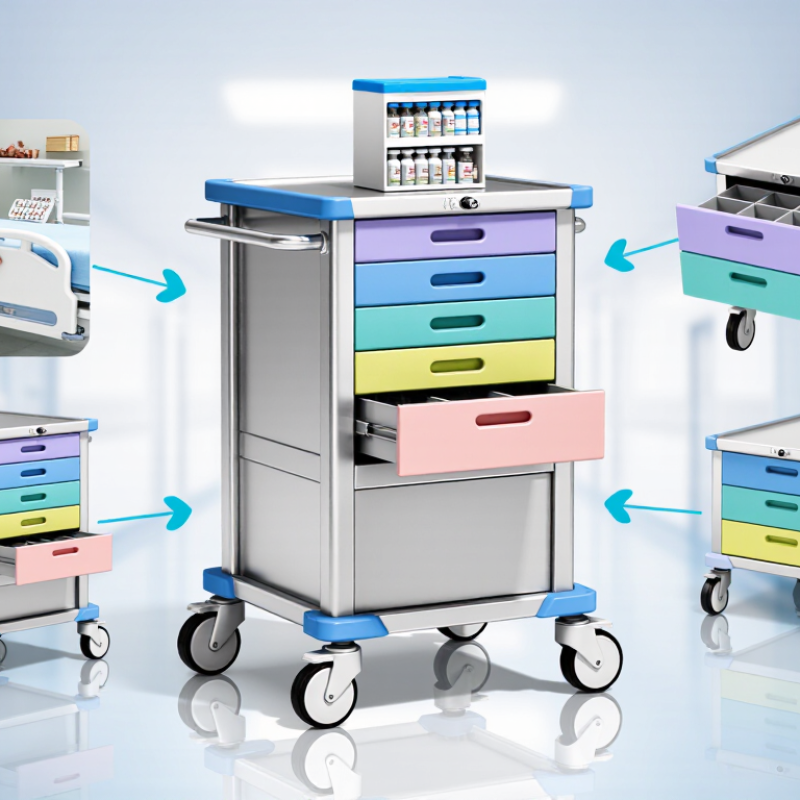
Configurations commonly include shallow medication drawers, deeper supply drawers, adjustable dividers, removable trays, and label holders. |
Organised storage reduces selection errors and supports efficient medication preparation. |
Verify drawer dimensions, smooth travel, divider fit, label visibility, and full-extension performance. |
| Drawer Operation |
Drawers should open smoothly, resist unintended removal, and include positive stops or retention mechanisms. Soft-close systems may be specified for noise reduction. |
Reduces spill risk, pinch hazards, noise, and accidental drawer detachment. |
Perform repeated opening and closing cycles and inspect runners, stops, handles, and alignment. |
| Security and Access Control |
Central locking is commonly provided through a key lock, electronic lock, keypad, or access-control system. Separate secure compartments may be required for controlled medicines. |
Helps prevent unauthorised access and supports medication-management procedures. |
Check lock durability, key or credential control, emergency access arrangements, and audit requirements where applicable. |
| Castors and Mobility |
Typical configurations use four medical-grade swivel castors, often 100–125 mm in diameter, with at least two braking castors. Directional-locking options may be specified for long corridors. |
Provides controlled movement, stability during use, and easier transport across clinical flooring. |
Test rolling resistance, braking effectiveness, directional tracking, swivel action, and performance on thresholds. |
| Stability and Ergonomics |
The trolley should remain stable with drawers open and during normal pushing, pulling, turning, and braking. Handles should be positioned for comfortable use by clinical staff. |
Reduces tip-over risk, worker strain, and accidental contact with patients or equipment. |
Conduct stability tests with drawers extended and the trolley loaded to its rated working capacity. |
| Hygiene and Cleanability |
Surfaces should be smooth, non-porous, sealed, and free from unnecessary crevices. Corners should be radiused where practical, and materials should tolerate the disinfectants specified by the healthcare facility. |
Supports infection-prevention procedures and reduces accumulation of dirt and biological contamination. |
Review chemical-compatibility data and inspect welds, joints, seams, handles, and internal drawer surfaces. |
| Worktop and Accessories |
Common options include a raised-edge worktop, sharps-container holder, waste-bin holder, IV-pole socket, oxygen-cylinder holder, side rails, and document or tablet supports. |
Improves workflow while helping keep medication preparation and waste handling organised. |
Confirm accessory load ratings, secure attachment, cleanability, and compatibility with the trolley frame. |
| Electrical Features |
If the trolley includes powered devices, charging ports, a battery, or electronic access control, the electrical system must be separately assessed for the destination market and intended use. |
Reduces electrical, battery, charging, and electromagnetic risks. |
Request electrical safety, battery, charger, and electromagnetic-compatibility test documentation where applicable. Non-powered trolleys do not require electrical testing for features they do not contain. |
| Quality Management |
Suppliers serving healthcare markets should be able to demonstrate controlled design, purchasing, production, inspection, nonconformity handling, and traceability processes. |
Consistent quality management reduces variation between production batches. |
Review the supplier's quality-management certification and audit the scope to confirm that it covers the relevant products and sites. |
| Risk Management |
Potential hazards should be assessed, including tip-over, sharp edges, pinch points, unintended movement, unauthorised access, cleaning-agent damage, and incorrect accessory installation. |
Identifies foreseeable use and misuse conditions before the product enters clinical service. |
Request a documented product risk assessment and confirm that identified risks are addressed through design or instructions. |
| Applicable Standards Framework |
Depending on classification, market, and product configuration, procurement may reference ISO 13485 for medical-device quality management, ISO 14971 for medical-device risk management, and relevant national requirements. Electrical standards apply only when electrical functions are included. |
Provides a structured basis for quality control, risk evaluation, regulatory review, and supplier qualification. |
Verify current certificates, their validity, certification scope, issuing body, and correspondence with the exact trolley model. |
| Documentation and Traceability |
Expected documentation may include user instructions, cleaning guidance, maintenance schedules, load ratings, spare-parts information, inspection records, and serial or batch identification. |
Supports safe operation, preventive maintenance, complaint handling, and product traceability. |
Review a complete technical file or document package before purchase and confirm that documents are supplied in the required language. |
| Pre-Shipment Inspection |
Inspection should cover dimensions, finish, welds, drawer alignment, locks, castors, accessories, labels, packaging, and functional operation. |
Detects manufacturing defects before products are shipped or installed in a healthcare facility. |
Use an agreed inspection checklist, sampling plan, acceptance criteria, and photographic or inspection-report records. |
| Warranty and After-Sales Support |
Procurement specifications should define warranty duration, excluded wear parts, response times, replacement-part availability, repair procedures, and technical support channels. |
Reduces downtime and improves the total cost of ownership over the trolley's service life. |
Review the written warranty, spare-parts list, service-level commitments, and maintenance training provisions. |
| Procurement Note |
Dimensions, capacities, materials, certificates, and regulatory obligations vary by model and destination market. Values shown above are practical procurement reference ranges rather than universal specifications. |
A final purchase decision should be based on the approved technical specification and the requirements of the intended healthcare facility. |
Compare the supplier's technical file, sample unit, test evidence, and compliance documents with the final purchase contract. |