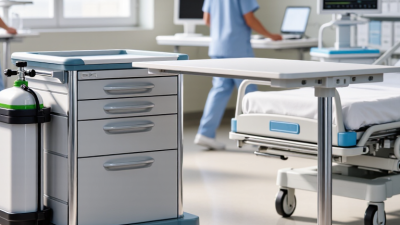
Best Medical Crash Cart Manufacturers in China

Choosing a medical crash cart is a practical decision about readiness, movement, and access under pressure. In a treatment room, staff may need to reach labeled drawers quickly while steering around beds, cables, and crowded corridors. Small details count: smooth-running casters, secure drawer locks, clear labels, and a handle that feels steady in use. Details matter. Cart layouts vary, and a defibrillator shelf or oxygen-cylinder holder should match the equipment and workflow expected at the facility.

China has a broad base of medical equipment manufacturers, but product claims deserve careful review. A buyer should compare construction materials, drawer configurations, load capacity, brake design, accessories, and available service support. Ask for current product specifications, inspection records, and relevant quality documentation. Confirm that the documents apply to the exact model being offered. A polished brochure is not proof of performance.

This guide introduces medical crash cart manufacturers in China and the factors that can help buyers assess them more consistently. It considers product range, customization, manufacturing transparency, communication, and after-sales support. Not every cart fits. A compact unit may suit a clinic, while a larger hospital may need more storage and a different accessory arrangement. There is no perfect checklist; local workflows and procurement requirements differ. The goal is to make comparisons clearer, identify questions worth asking, and avoid choosing on price or appearance alone.
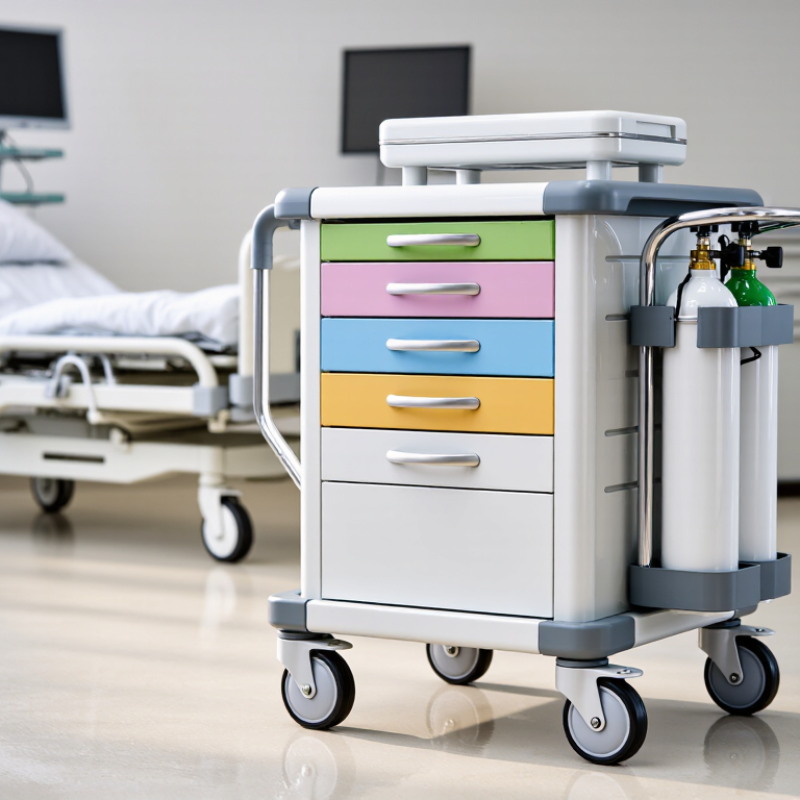
Best Medical Crash Cart Manufacturers in China

Medical Crash Carts: Definition, Purpose, and Clinical Use

A medical crash cart is a mobile cabinet stocked with equipment and supplies for urgent clinical response. It may hold a defibrillator, airway tools, medications, and intravenous supplies. Its purpose is to keep essential items close when seconds matter. The cart supports trained staff; it does not replace clinical judgment or established emergency procedures. Layout and contents should reflect the facility’s patient population and care setting.

During an emergency, staff need to locate supplies quickly, even in a crowded room. Clearly labeled drawers and a consistent arrangement can reduce searching. Locking wheels help keep the cart steady, while smooth movement matters in narrow corridors. After use, staff should restock the cart and check medication dates, equipment function, and supply levels. Small gaps can be easy to miss. When assessing a manufacturer, request clear product specifications and practical quality records, then inspect a sample where possible.

Tips: Use a written restocking checklist. Keep the layout familiar. Test the wheels and brakes regularly. A perfect setup on paper may still feel awkward during a real response, so ask clinical staff to review it.

Essential Features and Configurations of Modern Crash Carts

Modern crash carts are designed to keep emergency supplies visible, secure, and within reach. A stable steel or aluminum frame supports frequent movement through busy corridors. Smooth, sealed surfaces make routine cleaning easier. Small details matter.

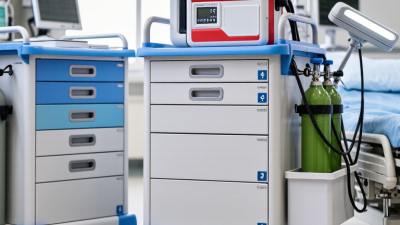
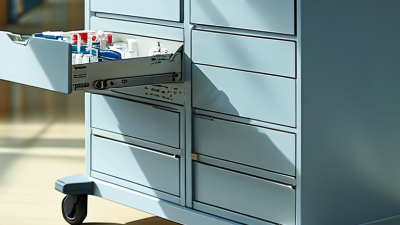
A practical configuration may include shallow drawers for airway supplies, deeper drawers for fluids, and a top shelf for monitoring equipment. Dividers help prevent small items from shifting when the cart turns. A defibrillator platform should hold equipment securely without blocking access to drawers. Side rails and a push handle improve control, while locking casters help keep the cart steady during treatment. Color-coded labels can speed retrieval, but only when staff use them consistently.

For hospitals comparing manufacturers in China, ask for clear specifications on load capacity, drawer dimensions, caster brakes, and lock options. Request details about cleaning compatibility and replacement parts, too. These points are easier to verify than broad claims about durability. A sample cart can reveal issues that drawings miss, such as a drawer that catches or a handle at an awkward height. There is no single perfect layout. The best configuration reflects the facility’s protocols, equipment, and staff feedback, and it may need adjustment after daily use.

How Chinese Manufacturers Design, Produce, and Test Crash Carts

For Chinese crash-cart manufacturers, design starts with the emergency team’s reach: frequently used supplies need clear labels, and drawers should open without blocking nearby equipment.

The American Heart Association’s 2024 Heart Disease and Stroke Statistics Update estimates about 292,000 adult in-hospital cardiac arrests occur annually in the United States. That figure makes fast access a practical design requirement, not a styling detail.

Production quality depends on repeatable controls. Under ISO 13485:2016, manufacturers maintain documented quality-management processes; ISO 14971:2019 provides a framework for identifying and managing device-related risks.

In practice, this can mean checking welds and drawer alignment, recording material batches, and inspecting sharp edges before assembly. Small details matter.

Testing should recreate routine handling. Teams can verify caster locks, drawer retention, frame stability under load, and resistance to commonly used cleaning agents. Test records should identify the method, result, and any corrective action.

A cart may pass a load test yet still feel awkward in a crowded corridor. That deserves review.

A smooth finish is not proof of readiness.

Hospitals should also confirm that drawer layouts and service plans match local workflows before ordering.

Key Criteria for Evaluating Medical Crash Cart Manufacturers in China

A medical crash cart manufacturer should be evaluated on more than price and appearance. The WHO Global Patient Safety Report 2024 estimates that one in ten patients experiences harm in healthcare, with over three million deaths linked to unsafe care each year. These figures are not specific to crash carts, but they underline why dependable equipment and clear maintenance records matter. Ask manufacturers for quality-system documentation, risk-management procedures, and traceable inspection records—not just a certificate image.

Inspect the cart in person when possible. Push it across a doorway threshold, test each caster brake, and open fully loaded drawers. Check that emergency supplies stay in place during movement and that drawer labels remain readable under clinical lighting. Details matter. Request load-capacity and stability test results, cleaning-compatibility information, and evidence that replacement parts will remain available. ISO 13485 certification can support confidence in a manufacturer’s quality system, but its scope and current validity should be verified.

A responsive supplier should provide drawings, spare-part lists, delivery estimates, and a clear process for handling defects. Compare these commitments in writing. For Chinese manufacturers, also assess export packaging, communication across time zones, and consistency between the approved sample and delivered units. A polished sample is not enough. Some hospitals may prioritize low cost, but a cheaper cart can become expensive if brakes fail early or parts are difficult to source. Real-world performance still needs checking.

Best Medical Crash Cart Manufacturers in China - Key Criteria for Evaluating Medical Crash Cart Manufacturers in China

Use this suggested, evidence-based framework to compare suppliers. The weights are evaluation recommendations, not published industry rankings or claims about any particular manufacturer.

Evaluation Criterion Suggested Weight What to Verify Examples of Supporting Evidence Practical Evaluation Check
Regulatory status and intended use 20% Clarify the cart’s intended use and whether the specific product is regulated as a medical device in the destination market. Requirements can differ by product design, claims, and jurisdiction. Product classification rationale; applicable registration or authorization records where required; product labeling and instructions for use; export documentation relevant to the destination market. Check that the product identity, intended use, manufacturer details, and regulatory documents are consistent.
Quality management system 15% Review the manufacturer’s quality controls for design, purchasing, production, inspection, nonconformities, and corrective action. ISO 13485:2016 is a quality-management standard for medical-device organizations; confirm that any claimed certification is valid and its scope is relevant. Current certificate and certification scope; audit information where available; inspection records; documented corrective-action process. Confirm the certificate holder, site, scope, and validity with the issuing certification body where possible.
Design and clinical workflow 15% Assess drawer layout, access to supplies, handle and push-bar placement, accessory compatibility, and suitability for the intended care environment. Dimensioned drawings; product specifications; configuration options; sample unit or demonstration; risk-management documentation where applicable. ISO 14971:2019 describes risk management for medical devices. Test a representative setup with the intended accessories and supply arrangement, rather than relying only on catalog images.
Structural safety and mobility 15% Verify the stated load limits, stability, caster and brake performance, drawer retention, and durability under the buyer’s expected operating conditions. Do not assume a universal load rating for all crash carts. Written load ratings and test methods; inspection or test reports; caster and brake specifications; maintenance instructions. Compare the documented limits with the planned load and check stability, rolling, braking, and drawer operation on a sample unit.
Cleaning and material suitability 10% Check surface finish, seams, joints, and material compatibility with the cleaning and disinfection products used at the facility. Suitability depends on the specific material and chemical exposure. Material specifications; cleaning instructions; chemical compatibility information or test evidence for the intended disinfectants. Confirm that the instructions cover the facility’s actual cleaning agents and routine cleaning process.
Configuration and customization 8% Evaluate available drawer configurations, dividers, accessory mounts, color options, and the supplier’s process for controlling changes to an approved design. Configuration list; drawings for the quoted model; change-control records; written confirmation of included accessories. Ensure the quotation, drawings, sample, and purchase specification describe the same configuration.
Identification and documentation 7% Check product identification, lot or serial traceability where applicable, and the clarity of supplied information. ISO 20417:2021 addresses information supplied by medical-device manufacturers; ISO 15223-1:2021 specifies symbols used with medical-device information when applicable. Labels; instructions for use; traceability procedure; symbol explanations where required; document language options. Review the physical label and documentation for legibility, consistency, and suitability for the destination market.
After-sales support and spare parts 5% Establish how warranty claims, replacement parts, maintenance questions, and product complaints are handled. Written warranty terms; spare-parts list; service contact and response process; complaint-handling procedure. Ask for response timelines and confirm which parts are replaceable and available for the expected service period.
Delivery and order control 5% Assess production planning, packaging, inspection before shipment, and communication of delivery changes. Confirm lead times for the specific order rather than relying on general estimates. Order-specific schedule; packaging specification; pre-shipment inspection checklist; shipping and export document list. Use a written order specification and inspection criteria before production begins.
Total suggested weight 100% For each criterion, buyers may assign a consistent score—for example, 1 (insufficient evidence) to 5 (requirements clearly met and supported by evidence)—and calculate a weighted comparison. Define pass/fail requirements separately for regulatory and safety needs.

Comparing Leading Chinese Manufacturers by Products and Services

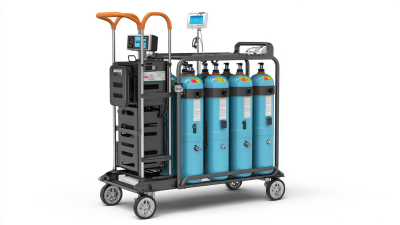
Comparing Chinese medical crash cart manufacturers means looking beyond product photos. Some focus on standard emergency carts with five drawers, side rails, a defibrillator shelf, and a sealed medication tray. Others offer modular layouts, stainless-steel frames, or compact carts for crowded treatment rooms. Check drawer dimensions and load ratings against the actual equipment your staff uses. A cart that looks spacious may feel cramped once monitors and oxygen cylinders are fitted.

Service differences matter just as much. Ask whether the manufacturer can provide layout drawings, accessory lists, replacement parts, and clear packing details. Confirm how wheel locks, drawer slides, and protective bumpers are inspected before shipment. A sample cart can reveal loose handles or awkward drawer movement that brochures miss. Not every supplier provides the same depth of customization, and response times should be tested with specific questions, not assumed.

Request material specifications and inspection records, then compare warranty terms and spare-part availability. If a supplier supports export projects, ask how it handles packaging, documentation, and installation guidance for your destination. These details are practical, not glamorous. Still, I would not treat a long feature list as proof of quality; independent checks and real user feedback can be limited. The best fit is the cart staff can reach, clean, and restock quickly during a demanding shift.

Go to Top