Choosing the best anesthesia cart for your hospital requires more than comparing prices and drawer counts. The right anesthesia cart should support safe medication management, rapid access, infection prevention, and consistent operating-room workflows. It must fit the realities of your clinical team.
A cart that works well in one theatre may fail in another. It depends on procedure volume, room size, storage needs, and staff preferences. Observe anesthesiologists and nurses during routine preparation. Notice where they reach, what they leave exposed, and which supplies are repeatedly misplaced. These small details reveal practical problems that product brochures often miss.
Safety should guide every decision. Look for secure drawers, clear labeling, smooth casters, reliable brakes, and surfaces that tolerate frequent disinfection. Confirm compatibility with your hospital’s equipment, medication policies, and emergency protocols. Ask biomedical engineers to review construction, electrical features, and maintenance requirements. Request demonstrations and trial the cart with real airway supplies, syringes, monitoring accessories, and waste containers.
Do not assume the most expensive model is the safest choice. Budget pressure matters. However, low purchase costs may create higher expenses through repairs, poor ergonomics, or wasted preparation time. Staff feedback should carry real weight, although it can be inconsistent. A documented evaluation process helps balance personal preference with measurable performance.
There is no universal winner. The best choice is the anesthesia cart that remains organized, clean, stable, and accessible under pressure. Reassess it after implementation. Real use may expose weaknesses that initial testing missed.
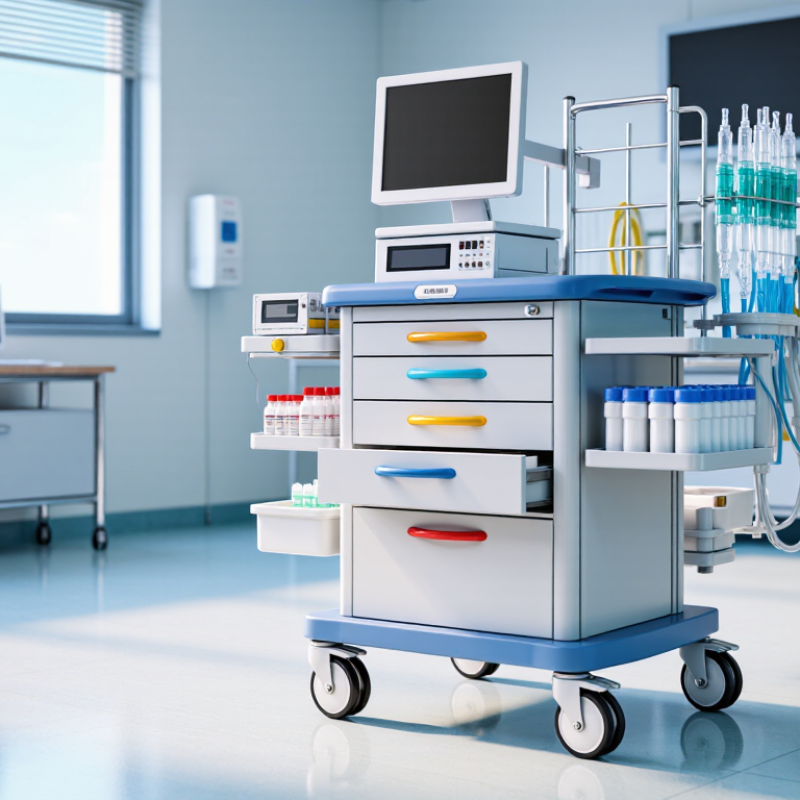
How to Choose the Best Anesthesia Cart for Your Hospital?
The World Health Organization estimated 234 million surgical procedures worldwide each year. This figure shows the enormous scale of operating-room demand. It is not a daily workload forecast for every hospital. However, it offers useful context when planning anesthesia resources.
A hospital should translate surgical volume into practical cart requirements. Review cases by specialty, procedure length, and peak operating hours. A busy orthopedic room may need larger fluid storage and extra airway supplies. A short-stay surgery unit may need faster access to standard medications and monitoring accessories. Count daily cases, turnover time, and emergency interruptions. These details reveal whether one compact cart is enough.
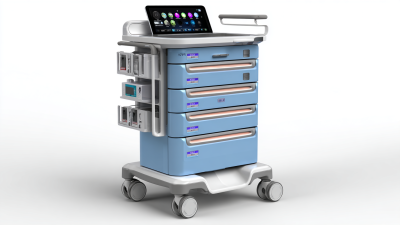
Accessibility matters during induction and recovery. Drawers should open smoothly, even when staff wear gloves. Clear labels can reduce searching under pressure. Lockable medication storage supports controlled access and routine accountability. Durable casters help staff move the cart between rooms without awkward lifting. Test the cart beside the anesthesia machine. Small clearance problems often appear only during real setup.
The WHO estimate has limits. It is an older global figure, and surgical definitions may differ across regions. Local operating data should guide the final choice. A monthly review can expose missing supplies, unused compartments, or unsafe crowding. That review may also show that our original cart assumptions were too optimistic.
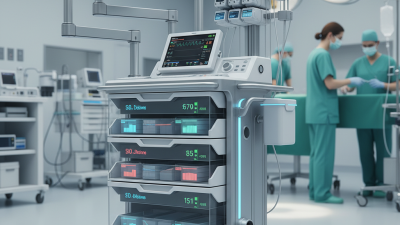
An anesthesia cart should support ASA Basic Anesthetic Monitoring Standards, not merely store syringes and airway tools. Select a cart with an integrated monitor or secure mounting space for pulse oximetry, ECG, non-invasive blood pressure, capnography, and temperature measurement. ASA standards call for blood pressure and heart rate assessment at least every five minutes. They also require continuous evaluation of oxygenation and ventilation during anesthesia.
Capnography deserves particular attention. The NAP4 national audit reported one major airway complication for approximately every 22,000 general anesthetics. Death or severe brain damage occurred in about one in 180,000 cases. These figures do not make monitoring optional. They show why the cart must keep oxygen analyzers, waveform capnography, and backup batteries immediately accessible.
A crowded drawer is not an emergency plan.
Check alarm volume, screen visibility, cable length, cleaning access, and battery status during a simulated case. The monitor should remain visible from the airway and surgical field. Staff should reach the manual ventilation bag without opening three drawers. Small design failures matter. A perfect checklist can still fail when cables tangle or alarms are muted. Hospitals should test the cart with actual users, record near misses, and revise the layout after honest review. ASA standards guide the baseline; local patient acuity and workflow determine the practical fit.
Choosing the Best Anesthesia Cart for Your Hospital
An anesthesia cart should support safe medication decisions, not merely hold more supplies. During a clinical storage review, examine each drawer at the point of care. Can staff identify high-alert medicines within seconds? Are similar packages separated? Small details matter.
Use ISMP high-alert medication guidance as a practical reference when specifying storage. High-alert medicines may include insulin, anticoagulants, concentrated electrolytes, opioids, and sedatives. Local risk assessments should determine the final list. Place these medicines in clearly marked, restricted compartments. Avoid storing them beside look-alike or sound-alike products. Separate concentrations when possible. Keep labels visible from the standing position.
Consider a cart with adjustable drawers, secure access, and enough space for readable labels. A crowded drawer invites selection errors. A transparent compartment may improve visibility, but it can also expose unnecessary information. Staff should test the layout during simulated medication preparation. Watch where hands reach first. Ask what causes hesitation.
Independent double checks may be appropriate for selected high-alert medicines, according to hospital policy. The cart should make that process easy, with space for verification and documentation. Review emergency restocking after real cases. We have seen “temporary” storage become permanent. That is a warning sign. Remove unused medications, update drawer labels, and reassess the design when procedures or medication risks change.
An anesthesia cart should support safe movement, clean handling, and rapid access during procedures. AORN recommendations emphasize reducing contamination risks through organized storage and reliable cleaning practices. Choose smooth, nonporous surfaces with few seams, deep grooves, or exposed hinges. These details matter when staff wipe the cart between cases.
Keep medications, airway supplies, and used items physically separated. Closed drawers can protect sterile supplies from splashes and unnecessary contact. Clear labels also reduce drawer searching during urgent moments. Keep it simple. A crowded top is difficult to disinfect.
Ergonomics deserves equal attention. Staff should reach essential supplies without twisting, bending, or stretching across equipment. Adjustable height and balanced casters can reduce strain during long shifts. Test the cart with actual gloves and common packaging. A design that feels efficient in a showroom may fail beside a crowded operating table.
Infection prevention staff, anesthesia professionals, and nurses should assess the cart together. Compare the workflow with current AORN guidance and your hospital’s cleaning policy. Check whether every surface can be reached with approved disinfectants. Small gaps are easy to overlook. We once assumed a removable tray improved cleaning, but its underside was rarely inspected. That kind of practical review can reveal weaknesses before they affect daily care.
A low purchase price can look attractive, but the life-cycle cost tells a fuller story. Evaluate drawer hardware, casters, work surfaces, locks, cleaning requirements, and replacement parts. Include staff training, preventive maintenance, and eventual disposal. A cart that needs frequent repairs can consume more budget than expected. It also interrupts operating-room workflow.
Uptime deserves measurable attention. Ask how quickly technicians respond, whether critical parts remain available, and how failures are documented. Check wheel stability on uneven floors and drawer performance after repeated cleaning. Compliance should cover electrical safety, load limits, infection-control procedures, and local healthcare requirements. Keep inspection records. Auditors and clinical managers need evidence, not promises. No forecast is perfect. A spreadsheet may still miss delays caused by unavailable parts.
Tips: Compare five-year ownership costs, not only purchase prices. Request maintenance schedules and service-response targets in writing. Test a fully loaded cart with real equipment before approval. Ask nurses and anesthesia staff to assess access, visibility, and movement. Their daily experience often reveals practical problems that a specification sheet cannot show. Consider a pilot period. It may expose weaknesses early, though it adds planning time. That trade-off is usually worth examining.
| Cookie | Duration | Description |
|---|---|---|
| cookielawinfo-checkbox-analytics | 11 months | This cookie is set by GDPR Cookie Consent plugin. The cookie is used to store the user consent for the cookies in the category "Analytics". |
| cookielawinfo-checkbox-functional | 11 months | The cookie is set by GDPR cookie consent to record the user consent for the cookies in the category "Functional". |
| cookielawinfo-checkbox-necessary | 11 months | This cookie is set by GDPR Cookie Consent plugin. The cookies is used to store the user consent for the cookies in the category "Necessary". |
| cookielawinfo-checkbox-others | 11 months | This cookie is set by GDPR Cookie Consent plugin. The cookie is used to store the user consent for the cookies in the category "Other. |
| cookielawinfo-checkbox-performance | 11 months | This cookie is set by GDPR Cookie Consent plugin. The cookie is used to store the user consent for the cookies in the category "Performance". |
| viewed_cookie_policy | 11 months | The cookie is set by the GDPR Cookie Consent plugin and is used to store whether or not user has consented to the use of cookies. It does not store any personal data. |