
Why Choose a Home Pilates Reformer?

A Home Pilates Reformer can turn a quiet corner into a practical movement studio. Its sliding carriage, springs, and footbar provide clear resistance during controlled exercises. I have found that this setup makes posture easier to notice, especially when a mirror reveals uneven shoulders or rushed breathing. The equipment also supports gradual progression, from gentle footwork to challenging core sequences.

Convenience is the strongest reason many people choose home training. A short session can fit between work, family responsibilities, and daily errands. No commute is required. Still, convenience does not guarantee consistency. The reformer may become expensive furniture without a realistic schedule and safe instruction. That uncomfortable possibility deserves attention.

A reliable Home Pilates Reformer should match the user’s height, strength, available space, and training experience. Stable construction, smooth carriage movement, secure springs, and clear weight limits matter more than attractive design. Beginners should learn basic alignment from a qualified Pilates instructor before attempting advanced exercises. Professional guidance can reduce avoidable strain and improve technique over time.

Research-informed Pilates practice emphasizes controlled movement, breathing, and progressive loading. However, equipment quality and personal results can vary. A home reformer is not a medical treatment, and it cannot replace clinical advice for pain or injury. I still believe its value is substantial when expectations remain realistic. The best reformer is not always the most expensive one. It is the one used safely, regularly, and thoughtfully.
Why Choose a Home Pilates Reformer?

What a Home Pilates Reformer Is: Carriage, Springs, and Resistance

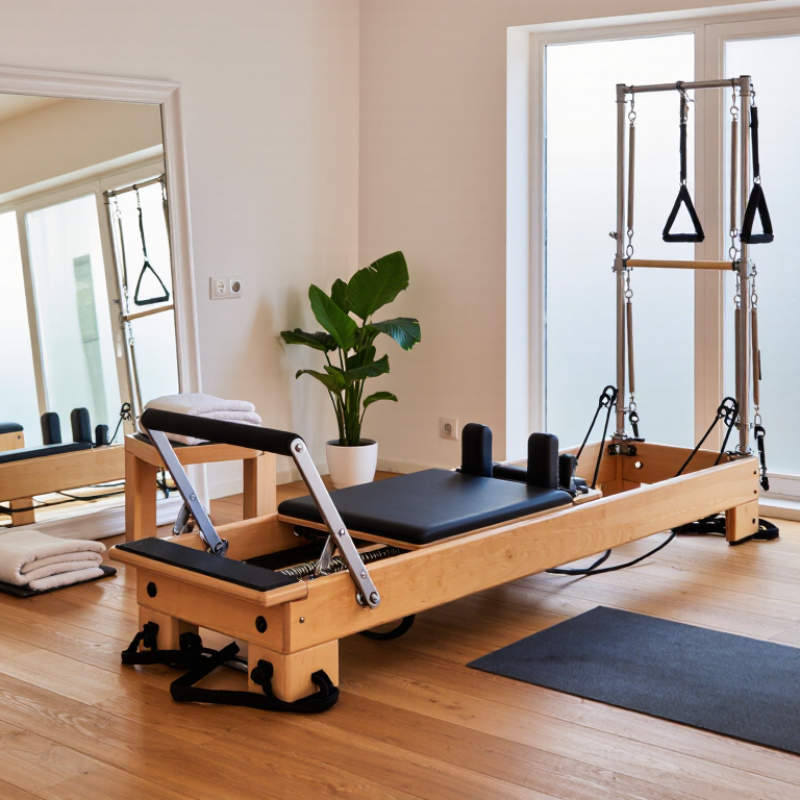
A home Pilates reformer uses a sliding carriage inside a stable frame. Your hands or feet move the carriage against springs, creating adjustable resistance. The footbar changes joint angles, while straps guide controlled arm and leg patterns. It is not simply a stronger mat. The moving surface demands balance, alignment, and steady breathing. A practical coaching observation is simple: lighter springs can feel harder when control fails.

The World Health Organization recommends 150–300 minutes of moderate activity weekly for adults. Its 2020 guidelines also encourage muscle-strengthening work on at least two days. A reformer can support these goals, although it does not replace walking or aerobic training. Resistance depends on spring tension, carriage travel, tempo, and body position. A heavier spring is not automatically better. That detail matters. Qualified instruction helps users choose safe ranges and avoid forcing the spine or shoulders.

The Global Wellness Institute’s 2023 Global Wellness Economy Monitor valued the physical activity economy at 1.1 trillion dollars in 2021. This figure reflects broad participation, not proof that every home device works. A reformer earns its space through repeatable setup. Springs, carriage, footbar, and straps create measurable variables. Progress might mean one smoother repetition, not dramatic soreness. Still, home practice has a weakness. Without feedback, users may repeat small errors. A mirror, gradual programming, and professional assessment can improve reliability, but the equipment is not perfect.

How Reformer Pilates Supports WHO’s 150-Minute Weekly Activity Goal

Why Choose a Home Pilates Reformer?

A home Pilates reformer can support the WHO’s goal of 150 minutes of moderate weekly activity. The key is consistency, not expensive equipment. Five 30-minute sessions can create a practical routine. Reformer exercises strengthen the core, legs, hips, and back. They also challenge balance and controlled movement. However, Pilates intensity varies between people and sessions. Some workouts may not reach moderate aerobic intensity. A talk test can help: breathing should increase, but conversation should remain possible.

Tips: Schedule sessions like appointments. Begin with 20 minutes and build gradually. Keep water nearby and clear the floor around the machine. Use slow resistance changes. Stop if you feel sharp pain, numbness, or unusual dizziness. A qualified instructor can correct alignment, especially for beginners or people returning after injury.

My own reflection is simple: convenience does not guarantee progress. A reformer may sit unused when the routine feels too demanding. Pairing Pilates with brisk walking can make the weekly target more realistic. For example, three reformer sessions and two brisk walks may balance strength and aerobic work. Track breathing, energy, and recovery after each session. Improvement is not always dramatic. Sometimes better posture or easier stairs are the first useful signs. People with medical conditions should seek professional advice before increasing activity.

What Research Shows About Pilates, Strength, Balance, and Flexibility

Why Choose a Home Pilates Reformer?

Research suggests Pilates can support strength, balance, and flexibility when practiced consistently. A 2023 systematic review in Frontiers in Physiology reported meaningful improvements in balance and functional movement across several Pilates studies. These gains matter at home. A controlled footbar press can train the legs, while slow strap movements challenge the trunk without heavy impact. The research is promising, not perfect. Study designs, routines, and participant ages varied widely.

Pilates may improve flexibility through repeated, controlled ranges of motion. A 2022 review in Complementary Therapies in Medicine found positive effects on muscular strength and flexibility, although results differed between programs. The World Health Organization recommends 150–300 minutes of moderate aerobic activity weekly, plus muscle-strengthening work on at least two days. Pilates can contribute to strengthening, but it may not replace walking, cycling, or other aerobic exercise.

A home reformer also supports balance practice through unstable straps and single-leg patterns. Start with low resistance. Keep your ribs relaxed and your movements quiet. A qualified instructor can correct alignment through video feedback, especially after injury or pregnancy. Home training is convenient, but convenience can hide poor technique. That is where I remain cautious: research supports regular practice, not rushed sessions or dramatic promises.

Why Choose a Home Pilates Reformer? - What Research Shows About Pilates, Strength, Balance, and Flexibility

Training Dimension What Research Examined Research-Based Finding How a Home Reformer May Help Evidence Note
Muscular Strength Systematic reviews and controlled trials involving adults performing Pilates-based exercise. Pilates can improve muscular strength and muscular endurance, particularly in the trunk, hip, and lower-limb muscles. Results are generally more consistent for muscular endurance than for maximal strength. Adjustable spring resistance and controlled pushing or pulling movements allow progressive loading while maintaining a stable movement pattern. Useful for general strength development, but conventional resistance training may be more appropriate when the main goal is maximal strength or muscle size.
Core Endurance Studies assessing abdominal and trunk-muscle performance after repeated Pilates sessions. Regular Pilates practice is associated with improvements in trunk endurance and control, although study quality and exercise protocols vary. The moving carriage and spring resistance require controlled trunk stabilization during exercises such as leg presses, bridges, and kneeling work. Benefits are most likely when exercises are performed consistently with appropriate technique and progression.
Balance Randomized trials and reviews involving balance tests in healthy adults and older adults. Pilates may improve static and dynamic balance, with particularly relevant findings in older adults and people with reduced balance capacity. Slow, precise movements challenge body awareness, postural control, coordination, and the ability to stabilize against changing resistance. Balance improvements are promising, but Pilates should complement—not replace—fall-prevention and functional balance training when clinically indicated.
Flexibility and Range of Motion Clinical trials and systematic reviews measuring joint range of motion and flexibility. Pilates commonly produces small-to-moderate improvements in flexibility and range of motion, especially when sessions are repeated over several weeks. The reformer supports lengthened positions, controlled mobility, and assisted movement through a comfortable range. Improved flexibility depends on training frequency, baseline mobility, exercise selection, and individual response.
Postural Control Studies examining posture, alignment, movement quality, and trunk control. Pilates-based programs may improve postural awareness and movement control, although objective posture measurements are less consistent than self-reported benefits. Visual feedback, spring resistance, and a stable platform can help users practice alignment and controlled transitions. Better posture is not guaranteed and should not be presented as a treatment for every spinal or musculoskeletal condition.
Low-Impact Exercise Research on Pilates participation, joint loading, and exercise tolerance. Pilates is generally considered a low-impact form of exercise, with less repetitive impact than running or jumping-based activities. The carriage and springs can provide support and resistance without requiring repeated impact with the floor. Low impact does not mean risk-free; users should modify exercises for pain, injury, pregnancy, or medical limitations.
Consistency and Accessibility Exercise-adherence research and studies of home-based physical activity. Convenience and reduced travel time can support exercise adherence, but long-term results still depend primarily on regular participation. A home setup may make short, frequent sessions easier to schedule and repeat. The equipment itself does not guarantee adherence; instruction, motivation, space, cost, and safe setup also matter.
Research context: Findings are based mainly on studies of Pilates mat and apparatus programs rather than identical home-reformer protocols. Outcomes vary according to program length, exercise intensity, participant characteristics, supervision, and adherence.
Selected sources: Wells, Kolt, and Bialocerkowski, Journal of Bodywork and Movement Therapies (2012), systematic review of Pilates research; Lim, Poh, Low, and Wong, Archives of Physical Medicine and Rehabilitation (2016), systematic review and meta-analysis of Pilates for balance; Byrnes, Wu, and Whillier, Journal of Bodywork and Movement Therapies (2018), systematic review of Pilates for healthy people; Cruz-Ferreira et al., Sports Medicine (2011), systematic review of Pilates and health-related physical fitness.

How Home Training Aligns With ACSM’s Two-Day Weekly Strength Guidance

Why Choose a Home Pilates Reformer?

How Home Training Aligns With ACSM’s Two-Day Weekly Strength Guidance

A home Pilates reformer can make weekly strength training easier to schedule. The American College of Sports Medicine recommends muscle-strengthening activities at least two days each week. This guidance includes all major muscle groups, not only the muscles that look strongest. A reformer can support that goal through controlled resistance, repeated pushing, pulling, pressing, and stabilizing movements.

Two sessions can fit into real life. Try Tuesday and Saturday, with at least one recovery day between them. A 25-minute session might include leg presses, hip work, rowing movements, chest presses, and abdominal exercises.

Adjust the resistance so the final repetitions feel challenging, but still controlled. Your shoulders should stay relaxed, and your lower back should not fight for every movement. Form matters.

It is not magic.

Home training also removes travel time and crowded-room distractions. That convenience may improve consistency, which is often harder than choosing exercises. Still, a reformer does not automatically create a complete program. Some people may avoid enough resistance because the movement feels unfamiliar. Others may rush through repetitions and lose control.

Progress gradually, record how each session feels, and consider guidance from a qualified exercise professional if technique remains uncertain. Strength work should support your body, not punish it.

How to Choose a Safe Reformer Using PMA Standards and User Requirements

Why Choose a Home Pilates Reformer?

How to Choose a Safe Reformer Using PMA Standards and User Requirements

A home Pilates reformer can provide structured resistance without requiring a large studio. Safety, however, should guide the purchase. Use PMA-aligned education principles as a reference, not as proof that every machine is suitable. A qualified instructor should explain neutral alignment, controlled breathing, spring changes, and emergency stopping procedures. Safe movement depends on training, not equipment alone.

Inspect the frame, carriage, footbar, shoulder rests, ropes, and springs carefully. The carriage should glide smoothly without side-to-side wobbling. Springs need clear resistance levels and secure attachment points. Check the maximum user weight, adjustment range, floor clearance, and maintenance instructions. A stable footbar matters, especially during standing work. Look for readable warnings and a manual that explains setup, storage, and inspection intervals.

Your body and room also shape the right choice. A taller user may need longer travel and adjustable ropes. Someone recovering from an injury may need gentler springs, wider support, and professional supervision. Measure the room with the carriage fully extended. Leave space around the machine for mounting and dismounting. I once underestimated storage space; moving equipment around daily became frustrating. That small mistake deserves attention. Cheap accessories can also weaken an otherwise sound setup. Recheck every connection before each session, even when the reformer looks unchanged.

Why Choose a Home Pilates Reformer?

Use this practical scorecard to compare the features that matter most for safe home use. The criteria reflect common equipment-safety checks and user requirements. PMA principles support qualified instruction and safe movement practice, but PMA is not a product-certification program.

Scores use a 1–5 planning scale, where 5 means the feature deserves the highest priority for that user profile. The values are an illustrative decision model rather than laboratory test results or brand ratings. Always inspect the frame, carriage, springs, ropes, footbar, shoulder rests, and user instructions before purchase.

Go to Top