
Top Inulin Powder Suppliers for Global Buyers

For global buyers, choosing an Inulin Powder supplier requires more than comparing prices. Product quality can vary by plant source, extraction method, and processing conditions. Chicory-root inulin remains widely preferred, especially for its neutral taste, dietary-fiber content, and prebiotic applications.

Glenn Gibson, a leading researcher in prebiotic science, described a prebiotic as “a selectively fermented ingredient that allows specific changes in the composition or activity of the gastrointestinal microflora.” This principle matters when evaluating Inulin Powder for functional foods, beverages, supplements, and clinical nutrition products. Buyers should request clear specifications, including inulin purity, degree of polymerization, moisture, microbiological limits, and solubility. They should also examine certificates of analysis, allergen statements, non-GMO documentation, and batch traceability.

Details matter.

A reliable supplier should explain the raw-material origin and production process without vague claims. Samples should be tested before large orders, particularly when the powder will enter a sensitive formulation. Packaging also deserves attention. Moisture-resistant bags, clean labeling, and stable palletization can prevent costly problems during long-distance shipping.

No supplier is perfect. Even established manufacturers may face seasonal crop changes, delayed documentation, or inconsistent communication. That is why global buyers should assess technical support, audit readiness, production capacity, and complaint handling together. The cheapest offer may not deliver the lowest total cost. A slightly higher price can provide stronger consistency and fewer reformulation risks.

This guide examines leading Inulin Powder suppliers through practical criteria. It focuses on evidence, not impressive promises. Real purchasing decisions need both confidence and healthy skepticism.
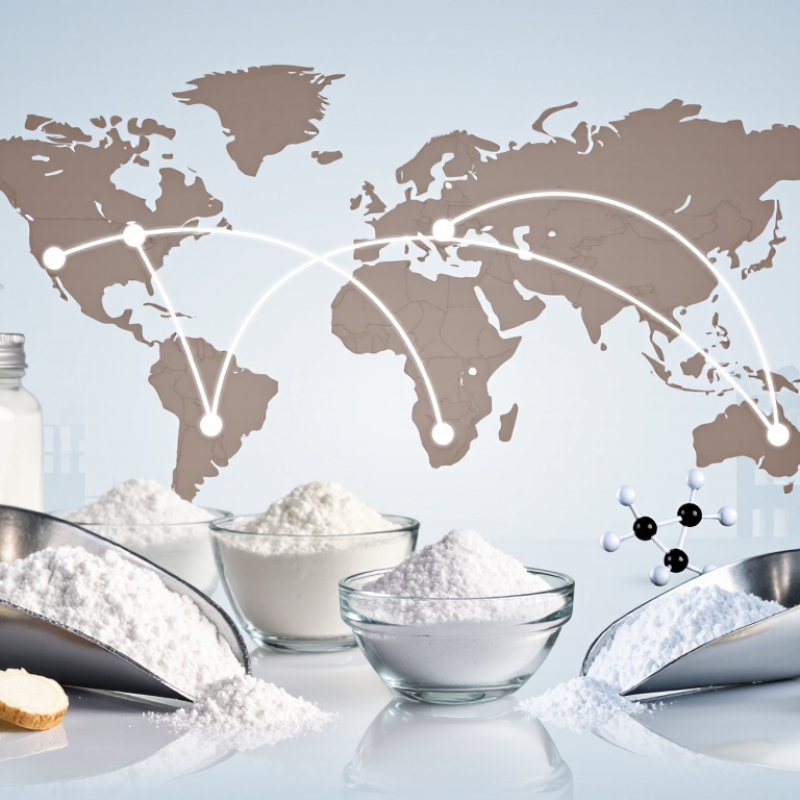
Top Inulin Powder Suppliers for Global Buyers

What Is Inulin Powder and Why Is It Used?

Inulin powder is a soluble dietary fiber found naturally in chicory root, Jerusalem artichoke, onions, and garlic. Commercial inulin is commonly extracted from chicory and purified into a neutral, pale powder. It has a mildly sweet taste and dissolves well in many food and beverage formulas.

Manufacturers use inulin to increase fiber content, reduce added sugar, and improve mouthfeel. It can add body to yogurt, nutrition bars, cereals, and powdered drinks.

In the digestive system, inulin acts as a prebiotic fiber that supports beneficial gut bacteria. However, tolerance varies. Large servings may cause gas, bloating, or discomfort, especially for sensitive consumers. It is easy to overstate its benefits. Clear serving guidance matters.

Tips:

Global buyers should request a specification sheet, certificate of analysis, allergen statement, and microbiological results. Check the fiber percentage, moisture level, origin, particle size, and packaging conditions. Ask whether the powder is suitable for the intended application. A small pilot batch can reveal problems with sweetness, solubility, or texture before a larger order. Supplier reliability also depends on traceability, consistent documentation, and stable delivery practices. Health claims should follow the destination market’s current regulations.

Key Quality Standards for Selecting Inulin Suppliers

For global buyers, supplier selection should begin with measurable quality, not attractive specifications. A 2024 inulin market outlook projects annual growth near 8% through 2030, increasing pressure on producers and testing systems. Ask for the botanical source, extraction method, degree of polymerization, and minimum inulin content. Chicory-derived powder should have clear identity testing and consistent fiber values across batches. A polished certificate is not proof enough.

Reliable suppliers should provide batch-specific certificates of analysis, including moisture, ash, microbiological counts, yeast, mold, heavy metals, pesticide residues, and allergens. Testing should follow recognized methods, such as AOAC dietary-fiber procedures, with laboratories operating under ISO/IEC 17025. Food-safety management aligned with ISO 22000:2018 also shows stronger process control. Check traceability from harvested roots to sealed bags. Small details matter.

Review stability data under heat and humidity, especially when shipping across tropical routes. Packaging should protect the powder from moisture, odor transfer, and clumping. Suppliers should explain storage limits and shelf-life evidence, rather than copying generic numbers. Industry nutrition reports commonly place inulin’s fiber content above 90% in commercial high-purity grades, but specifications vary by hydrolysis level. I would request three recent lots before approval. One sample can mislead. Suppliers should also disclose deviations, failed tests, and corrective actions; transparency is sometimes more valuable than a perfect-looking document.

Top Inulin Powder Suppliers for Global Buyers - Key Quality Standards for Selecting Inulin Suppliers
Evaluation Dimension Recommended Buyer Benchmark Supplier Documentation or Test Evidence Why It Matters for Global Buyers
Raw Material Origin Clearly identified botanical source, most commonly chicory root or Jerusalem artichoke Country-of-origin statement, raw-material specification, traceability records and harvest information Supports ingredient authenticity, supply-chain transparency and origin-specific labeling requirements
Inulin Content A defined minimum purity level, commonly specified at 90% or higher on a dry basis for standard commercial powders Batch-specific certificate of analysis showing inulin or fructan content and the analytical method used Confirms that the material meets formulation, nutrition and cost-performance expectations
Degree of Polymerization Declared chain-length profile, such as short-chain, long-chain or high-performance inulin; commercial inulin may contain varying chain lengths Technical data sheet with degree-of-polymerization information or chromatographic profile Affects sweetness, solubility, mouthfeel, digestive tolerance and suitability for beverages, dairy products or bakery applications
Moisture A controlled maximum commonly stated in the product specification, often around 5% or lower depending on grade Certificate of analysis, validated moisture test method and storage-stability data Helps reduce caking, microbial risk and loss of flowability during transport and storage
Appearance and Color Free-flowing powder with a consistent white to cream color and no visible foreign matter Approved product specification, retained sample procedure and batch inspection record Protects finished-product appearance and helps identify contamination or process variation
Solubility and Dispersibility Performance suitable for the intended application, with test conditions defined for temperature, concentration and mixing time Application data, solubility test results and recommended processing instructions Determines whether the powder can be used effectively in nutrition powders, beverages, dairy products or baked goods
Microbiological Safety Compliance with the importing market and the agreed product specification; commonly reviewed parameters include total plate count, yeast and mold, coliforms, Escherichia coli and Salmonella Batch microbiological report from an accredited or qualified laboratory; Salmonella is frequently required to be absent in the tested sample Reduces food-safety risk and supports regulatory clearance in different markets
Heavy Metals and Contaminants Results meeting the legal limits of the destination market for lead, cadmium, arsenic, mercury, pesticides and other relevant contaminants Recent laboratory reports, contaminant-control plan and compliance statement referencing applicable regulations Maximum limits differ by jurisdiction, so destination-specific verification is essential
Food-Safety Certification A documented food-safety management system such as HACCP, ISO 22000 or FSSC 22000, supported by valid certification where applicable Current certificate, scope of certification, audit status and issuing certification body Demonstrates structured control of biological, chemical and physical hazards
GMP and Hygiene Controls Documented good manufacturing practices covering sanitation, personnel hygiene, pest control, equipment maintenance and process control GMP certificate or audit report, sanitation records and corrective-action documentation Shows that production conditions are controlled consistently from receiving through packaging
Allergen Management A written allergen statement covering the product, shared equipment and manufacturing environment Allergen declaration, production-flow diagram, cleaning validation and cross-contact control procedure Supports accurate labeling and helps protect consumers with food allergies
GMO and Organic Status Status clearly declared as conventional, non-GMO or organic; certification should be provided when a claim is made Non-GMO statement, organic certificate, transaction certificate or identity-preservation records where relevant Enables lawful marketing claims and prevents unsupported statements on product labels
Additives and Processing Aids Ingredient composition disclosed in full; no undeclared carriers, anti-caking agents, preservatives or processing aids Full ingredient statement, manufacturing-process description and product specification Important for clean-label products, vegan formulations and customers with specific dietary requirements
Packaging Integrity Food-contact packaging that protects the powder from moisture, oxygen, contamination and physical damage Packaging specification, food-contact declaration, seal-integrity checks and packing photographs or inspection records Preserves product quality throughout international shipping and warehouse handling
Shelf Life and Storage A validated shelf life stated with storage conditions, commonly requiring a cool, dry environment and protection from humidity Stability data, expiry-date policy, recommended storage conditions and transport requirements Helps buyers manage inventory, reduce caking and maintain specification compliance until expiry
Batch Traceability Unique lot identification linking raw materials, production records, test results, packaging and shipment details Traceability procedure, lot coding example, mock-recall results and certificate-of-analysis records Enables rapid investigation, targeted recalls and reliable quality claims
Certificate of Analysis Provided for every shipment or batch, with results compared against the approved product specification Signed or electronically verified COA listing identity, purity, moisture, microbiology and relevant contaminant tests Provides batch-level confirmation instead of relying only on a general technical data sheet
Regulatory Documentation Documentation aligned with the buyer's destination market, intended use and product category Specification, safety data sheet where applicable, regulatory statement, labeling information and customs documents Reduces delays caused by missing import, food-labeling or ingredient-compliance information
Application Support Technical guidance for dosage, hydration, mixing order, heat processing and compatibility with the finished product Application guide, sample-development support, formulation data and response-time commitment Improves scale-up success and helps buyers select the correct chain-length profile and grade
Supply Reliability Documented production capacity, lead time, minimum order quantity and contingency planning Capacity statement, delivery-performance records, business-continuity plan and agreed service levels Supports stable production planning and reduces the risk of stockouts for global buyers
Note: Numerical limits and certification requirements should be confirmed against the supplier's current specification and the food regulations of the destination market. The benchmarks above are commonly used buyer-evaluation criteria rather than universal legal limits.

Leading Inulin Powder Supplier Regions and Market Strengths

Europe remains the strongest sourcing region for inulin powder, supported by established chicory cultivation and processing infrastructure. According to Grand View Research, the global inulin market was valued at approximately USD 1.7 billion in 2023. The report also forecasts steady growth through 2030, driven by prebiotic foods, dietary fiber products, and digestive health applications. Belgium, France, and the Netherlands offer mature supply networks, technical expertise, and efficient access to European food manufacturers.

North America suppliers benefit from strong demand for clean-label fiber ingredients and functional nutrition products. MarketsandMarkets estimates continued expansion in the inulin market, with demand rising across beverages, nutrition bars, dairy alternatives, and supplements. Buyers often expect neutral taste, consistent solubility, and clear allergen documentation. A practical check involves reviewing the certificate of analysis, moisture level, fiber assay, particle size, and packaging conditions. Small details matter here.

China and other Asian production centers can provide competitive pricing and flexible volumes. Their strengths may include large-scale processing and export capacity. However, regional rankings can mislead. Lower prices may reflect different purification standards, longer shipping routes, or weaker technical support. I would request a retained sample before approving a contract. A slightly earthy chicory note can change a finished beverage. Supplier evaluation should also compare batch consistency, traceability, lead time, and response quality, not only the quoted price.

How Global Buyers Can Compare Inulin Suppliers

Top Inulin Powder Suppliers for Global Buyers

How Global Buyers Can Compare Inulin Suppliers

Comparing inulin suppliers requires more than checking the lowest quoted price. Buyers should review inulin purity, botanical source, processing method, and specification consistency. Ask for a recent certificate of analysis from the exact production lot. Check dietary fiber content, moisture, ash, microbiological limits, and heavy metal results. Test methods should be clearly identified, not described as “standard testing.”

Traceability matters. A reliable supplier can connect each bag to a production date, raw material record, and quality release document. Review allergen controls, foreign-material prevention, storage conditions, and packaging strength. A 20-kilogram bag should arrive sealed, dry, and clearly labeled. Small details reveal operating discipline. Request samples from more than one lot when possible. One sample can look perfect.

Commercial terms also deserve close attention. Compare minimum order quantities, lead times, shelf life at shipment, payment terms, and delivery responsibilities. Confirm whether the quoted price includes testing, export documents, or protective packaging. Suppliers should explain how they manage supply interruptions without changing specifications. A polished website is not proof. I have learned this the hard way. Video audits, independent laboratory checks, and reference discussions can provide stronger evidence. Still, no review is flawless. Buyers should record assumptions, verify critical claims, and reassess suppliers after the first shipment.

Import, Packaging, and Supply Chain Considerations

Inulin demand is expanding, but cross-border supply is less simple than a product sheet suggests. Grand View Research’s 2024 Inulin Market report estimates strong growth through 2030, with digestive health driving demand. Forecasts differ, however. Buyers should request recent production data instead of trusting market estimates alone.

Import planning starts with documentation. Confirm the tariff classification, product origin, allergen statement, and food-grade status with a qualified customs broker. Each lot should include a certificate of analysis, moisture content, microbiological results, and traceability details. Inulin absorbs moisture easily. A damaged liner can create caking before the cargo reaches the warehouse. Sea freight may reduce cost, but long transit times require humidity controls and stable container loading.

Packaging needs equal attention. Multi-wall paper sacks with food-grade inner liners suit many industrial shipments. Smaller cartons may work better for frequent sampling or staged production. OECD’s Global Plastics Outlook reports that packaging creates about 40% of global plastic waste, so recyclable formats deserve serious consideration. Yet lighter packaging is not automatically safer. Weak seals can cause powder loss, contamination, and rejected deliveries. Pallets should stay dry, wrapped, and separated from odorous materials. A practical weakness in many purchasing plans is overreliance on one supplier. Maintaining two qualified supply routes may cost more, but it protects production when harvest conditions, port delays, or quality deviations disrupt normal schedules.

Common Inulin Powder Commercial Pack Sizes

Packaging format and net weight directly affect import documentation, pallet utilization, handling costs, and warehouse planning. The chart compares commonly used commercial inulin powder pack sizes without referencing any supplier or brand.

Bulk 20–25 kg units are generally suited to food and beverage manufacturers, while 0.5–1 kg formats are more suitable for laboratory, retail, or small-batch applications. Buyers should confirm actual pack dimensions, pallet configuration, moisture protection, labeling, and import requirements with the exporter before shipment.

Go to Top