
China Top 10 Dental Implant Screwdrivers Manufacturers
Selecting reliable Dental Implant Screwdrivers manufacturers requires more than comparing prices or product photographs. In China, experienced suppliers serve implant clinics, laboratories, distributors, and original equipment manufacturers worldwide. Their products may include manual drivers, torque-controlled drivers, hex drivers, and customized surgical instruments. Each design must support accurate engagement with the implant connection and reduce handling errors during clinical procedures.
This guide introduces ten notable Chinese manufacturers associated with Dental Implant Screwdrivers. The selection considers manufacturing experience, material quality, dimensional consistency, customization capability, quality systems, and international service. Stainless steel grades, surface finishing, handle ergonomics, and sterilization compatibility deserve close attention. A driver that feels smooth in the hand may still fail if its tip tolerances are inaccurate. Small differences matter. Supplier documentation matters too.
Reliable evaluation should include product drawings, compatibility charts, inspection records, and sample testing. Certifications can support trust, but they should not replace practical verification. Buyers should confirm applicable standards, sterilization instructions, torque limits, and after-sales support before placing large orders. Some manufacturers communicate these details clearly; others provide limited technical information. That weakness deserves careful reflection. No supplier is ideal for every application. This overview therefore offers a practical starting point, not a substitute for clinical judgment, regulatory review, or independent quality assessment. Teams should compare evidence directly and request updated documentation before making a final decision.
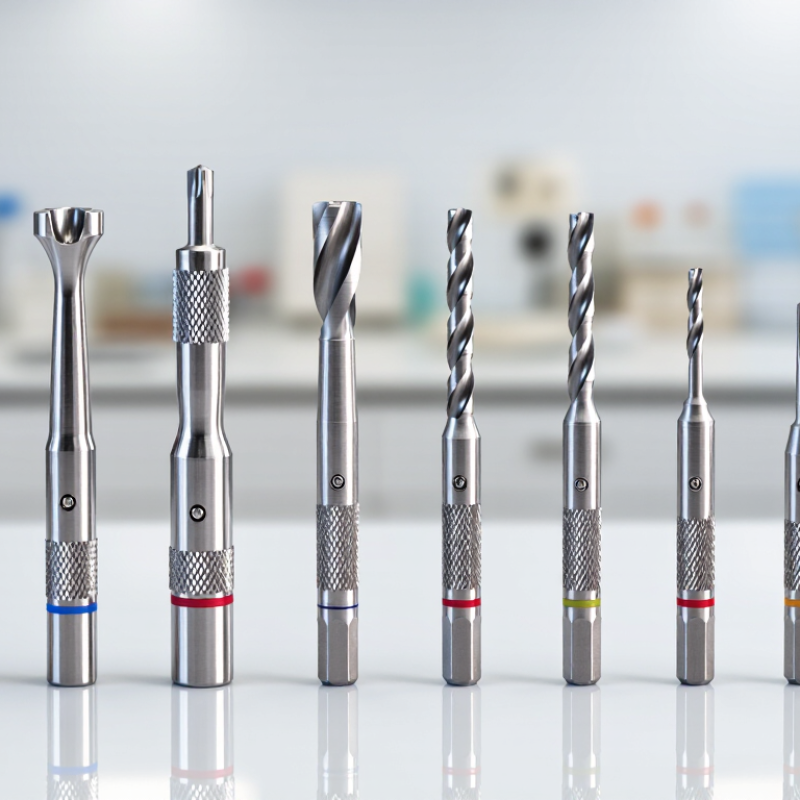
Definition and Role of Dental Implant Screwdrivers
China Top 10 Dental Implant Screwdrivers Manufacturers
Dental implant screwdrivers transfer controlled rotation to an implant abutment or prosthetic screw. They support seating, removal, and final tightening during restorative procedures. Their tips must match the screw head precisely. Poor engagement can damage the driver, screw, or internal implant connection.
The WHO Global Oral Health Status Report 2022 estimates that oral diseases affect nearly 3.5 billion people worldwide. This burden increases demand for reliable restorative treatment and accurate clinical instruments. A screwdriver does not place an implant. It helps protect the mechanical connection after placement. Correct geometry, stable grip, and suitable torque compatibility are essential. The tool is small, but its consequences are not. A torque value can still be misread, especially when visibility is limited or gloves reduce tactile feedback. This practical weakness deserves attention.
Tips: Check compatibility before every procedure. Confirm the connection type, driver size, and torque range. Clean the tip and inspect its edges under good lighting. Replace worn drivers promptly. Do not force a mismatched instrument. Manufacturer instructions and calibrated torque tools should guide final tightening. The ITI Consensus statements emphasize prosthetic accuracy and maintenance as important parts of implant therapy. However, clinical conditions differ. A screwdriver that feels secure may still provide incomplete engagement. Documenting instrument checks can improve consistency and support safer, more repeatable work.
China Top 10 Dental Implant Screwdrivers Manufacturers - Definition and Role of Dental Implant Screwdrivers
This anonymized table presents ten common dental implant screwdriver product profiles and their practical roles. It does not display company or brand names. Exact dimensions, interface geometry, torque limits, and sterilization instructions vary by implant system and must be verified against the applicable manufacturer’s documentation.
| No. | Product Profile | Typical Drive Interface | Primary Application | Definition and Clinical Role | Torque or Handling Control | Reprocessing Consideration |
|---|---|---|---|---|---|---|
| 1 | Manual Hex Driver | Internal hexagonal tip | Cover screws, healing abutments, and prosthetic screws | A hand-operated driver used to engage an internal hex recess and turn a compatible implant component during placement or removal. | Finger pressure; final tightening should use a calibrated torque instrument when specified. | Use validated cleaning and steam-sterilization procedures suitable for reusable dental instruments. |
| 2 | Long-Reach Hex Driver | Extended internal hex tip | Deep, angled, or tissue-restricted posterior access | Provides additional reach where a short driver cannot align with the prosthetic screw without contacting surrounding anatomy. | Maintain axial alignment; avoid lateral loading that can damage the recess or tip. | Inspect the slender shaft and tip for bending, wear, or deformation after each cycle. |
| 3 | Torque-Controlled Driver | Interchangeable system-specific tip | Definitive abutment and prosthetic screw tightening | Transfers a controlled tightening force to help achieve the screw preload recommended for the compatible implant connection. | Use the torque value stated for the specific implant system; do not assume one universal value. | Verify calibration according to the instrument’s instructions and keep detachable tips clean. |
| 4 | Ratchet-Compatible Driver | Ratchet or torque-wrench shank | Manual tightening in implant and prosthetic procedures | Connects to a compatible wrench or ratchet, allowing controlled rotation in confined oral working areas. | Use only with a compatible torque wrench when a specified tightening torque is required. | Check the connection shoulder and retention mechanism for debris or distortion. |
| 5 | Machine-Compatible Driver | Low-speed contra-angle shank | Laboratory or selected clinical screw manipulation | Fits a compatible handpiece for efficient rotation, but it must be used within the approved speed and torque limits. | Avoid uncontrolled power tightening; use a calibrated manual torque device for final seating when required. | Follow the handpiece and driver manufacturer’s cleaning, lubrication, and sterilization requirements. |
| 6 | Ball-End Angled Driver | Angulated ball-end hex tip | Limited-angle access and angled prosthetic restorations | Allows engagement when the handle cannot be positioned perfectly in line with the screw axis, within the permitted angular range. | Use only for systems designed for angled engagement; excessive angulation may strip the screw recess. | Examine the ball end carefully because rounding or wear can reduce engagement security. |
| 7 | Star- or Lobed-Interface Driver | Internal star or lobed profile | Implant systems using a proprietary or non-hexagonal screw recess | Transfers rotational force through a star-shaped or lobed interface designed to match the corresponding prosthetic screw. | The tip profile must match exactly; do not substitute a hex driver for a star or lobed interface. | Keep the recess and driver free of blood, cement, and debris to ensure full seating. |
| 8 | Screw-Retention Driver | Internal tip with retention feature | Small screws in narrow or difficult-to-access sites | Helps retain a prosthetic screw on the driver during transfer and initial placement, reducing the risk of dropping the screw. | Retention supports handling but does not replace the specified final torque procedure. | Inspect magnets, sleeves, or retaining elements where present; replace worn components. |
| 9 | Laboratory Restoration Driver | System-specific hex or lobed tip | Abutment adjustment, framework fitting, and prosthetic laboratory work | Supports repeated screw manipulation during fabrication and checking of implant-supported restorations outside the patient’s mouth. | Use for fitting and adjustment only unless the instrument is explicitly rated for clinical torque delivery. | Keep laboratory and clinical instruments clearly separated to reduce cross-contamination risk. |
| 10 | Retrieval and Removal Driver | Reversible or reinforced system-specific tip | Removal of healing components, abutments, and prosthetic screws | Provides controlled reverse rotation for component removal while minimizing damage to the implant connection and screw recess. | Apply steady axial pressure; stop if the screw is damaged, seized, or inadequately engaged. | Check the tip for distortion after high-resistance removal and discard damaged instruments. |